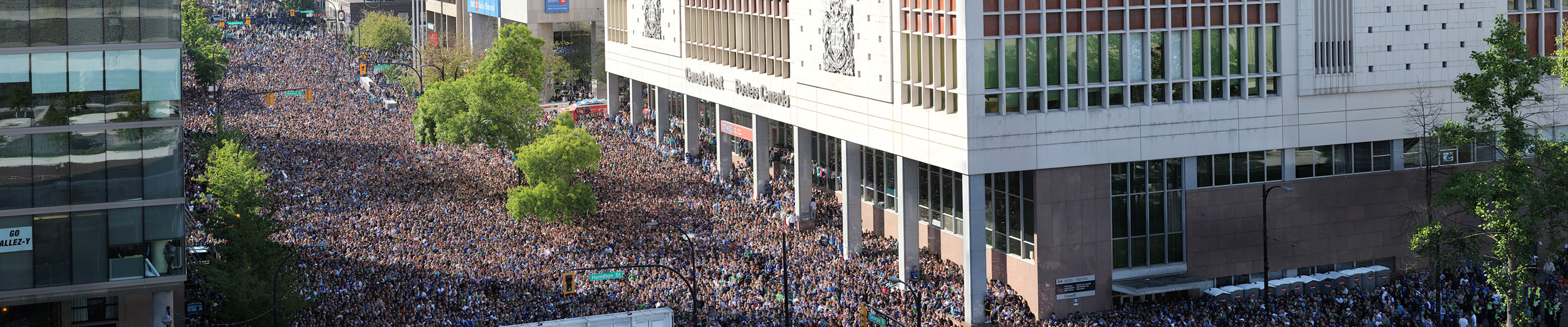
My pre-riot gigapixel photo of the Game 7 Crowd of the 2011 Stanley Cup continues to garner so much attention by various individuals, companies and institutions.
Most recently, it was used in a study by The Socionomics Institute which showed that through people’s facial expressions, the social mood of the crowd was predominantly negative.
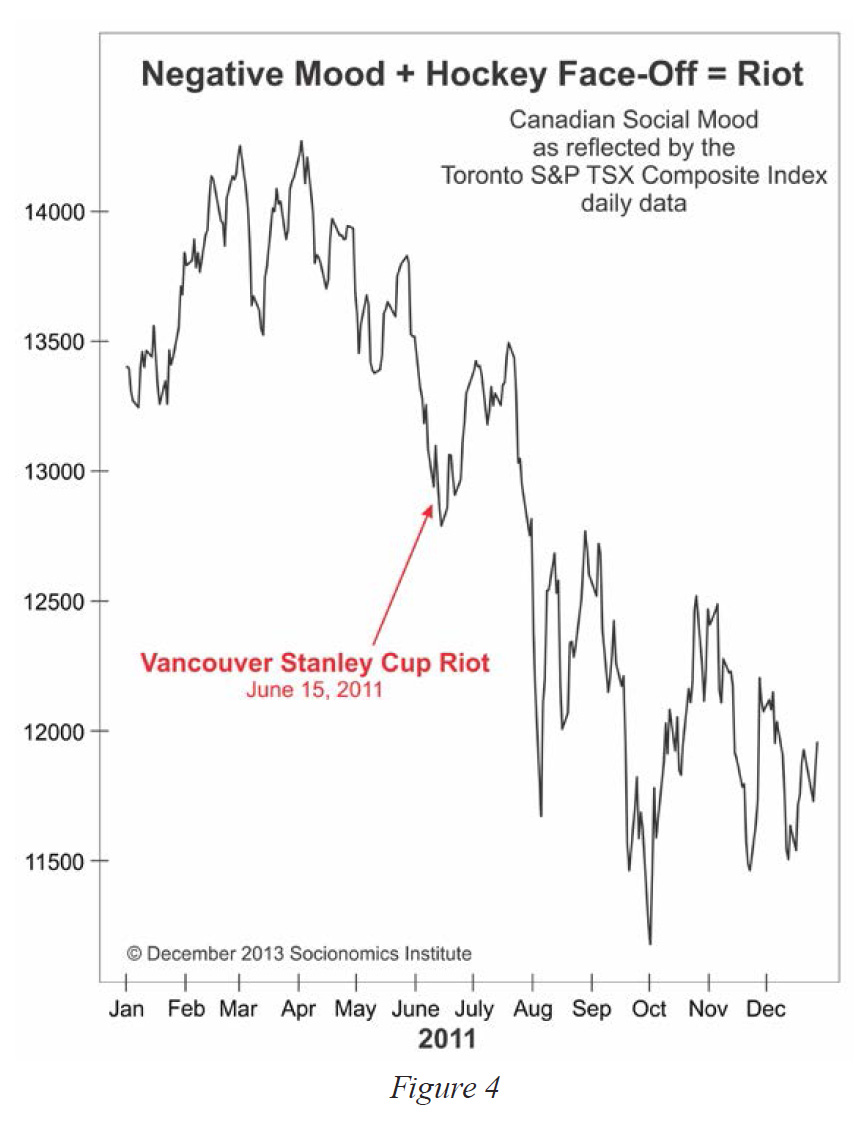
They theorized that the economy, particularly the S&P/TSX Composite Index (which was at a 9% decline at that time) was an indicator of the negative social mood and “may have played a role in the riot.”
The study does not suggest that 2011 Stanley Cup riot was a result of the decline in the stock markets but rather it points out that regardless of the outcome of the game, the general social mood of the crowd was already negative.
Below is a excerpt of the study “Social Mood Can Be Evident in Facial Expressions” by Alan Hall (The Socionomist December 2013).
Social mood is an unconsciously shared motivational impulse arising from social interaction independently from events. People express social mood in many ways. Stock markets provide the most rapid and best-documented reflection of the fluctuations in social mood. We are not really sure how social mood is communicated. It is communicated by what people say, surely, but there are probably many things … that are more unconscious: The way that facial muscles change, for example. We might be hearing content on television, but we are also getting messages [from] facial expressions.
Social mood is unconscious, but it influences conscious emotions, which are visible in facial expressions … “The face is one of the richest sources of communicating affective and cognitive information,”1 which simply means that we can tell a lot about what others are feeling and thinking by their facial expressions.
People who pose for group photos are conscious of what they are doing, yet the influence of social mood is still anecdotally evident.
Photos of unaware subjects in crowds are different, yet they also seem to reflect social mood.
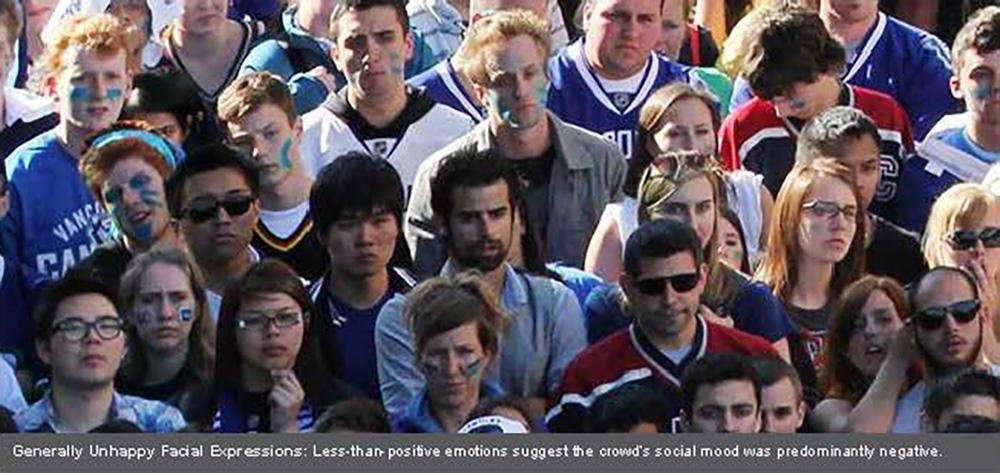
For example, this cropped photo shows a tiny portion of Ronnie Miranda’s GigaPixel image of many of the 100,000 hockey fans that crowded into the streets of Vancouver, Canada in June 2011.
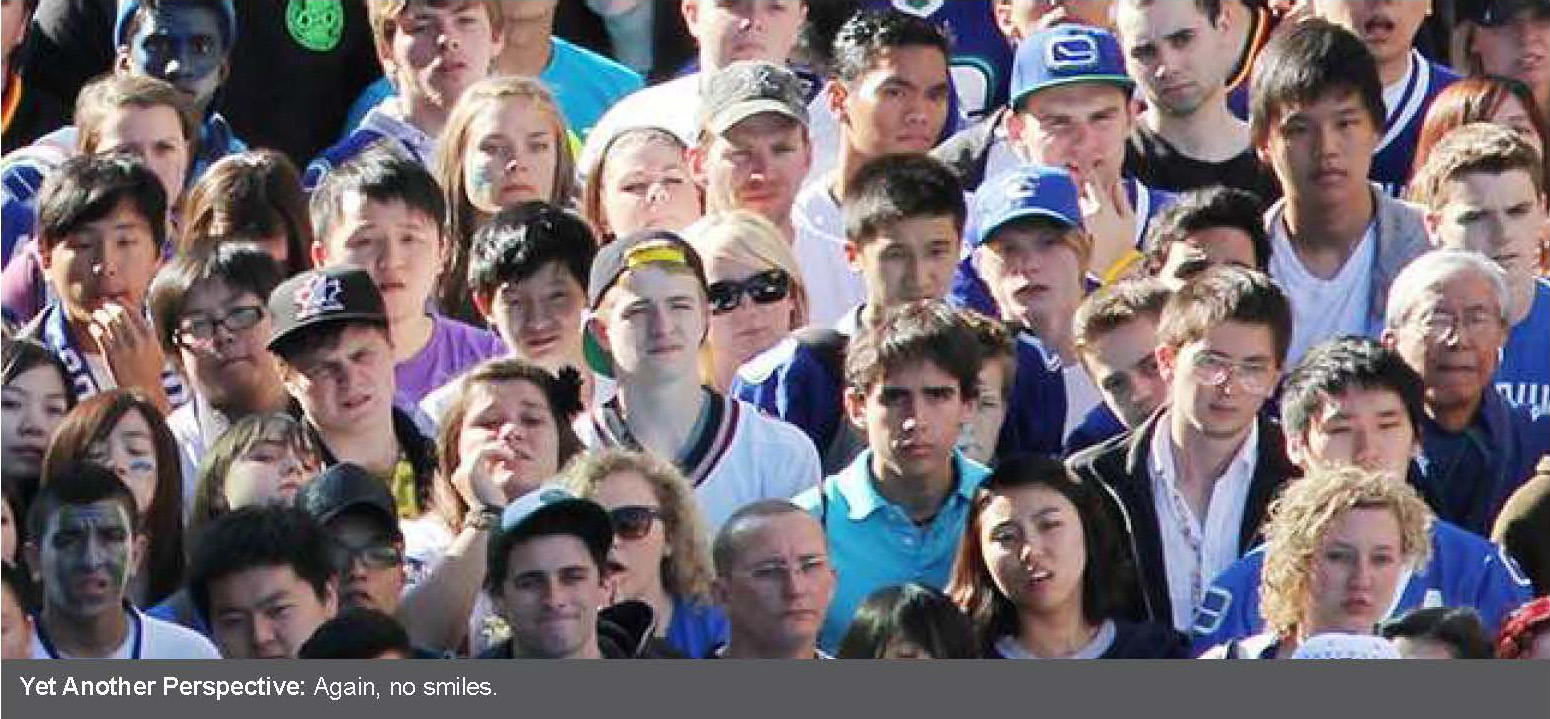
Notice the generally unhappy facial expressions, which reflect less-than-positive emotions. Since no one is smiling, the faces suggest that the crowd’s social mood was predominantly negative. And although this photo doesn’t tell us about the immediate direction of the mood trend, what happened next does…. the Vancouver Stanley Cup Riot erupted.
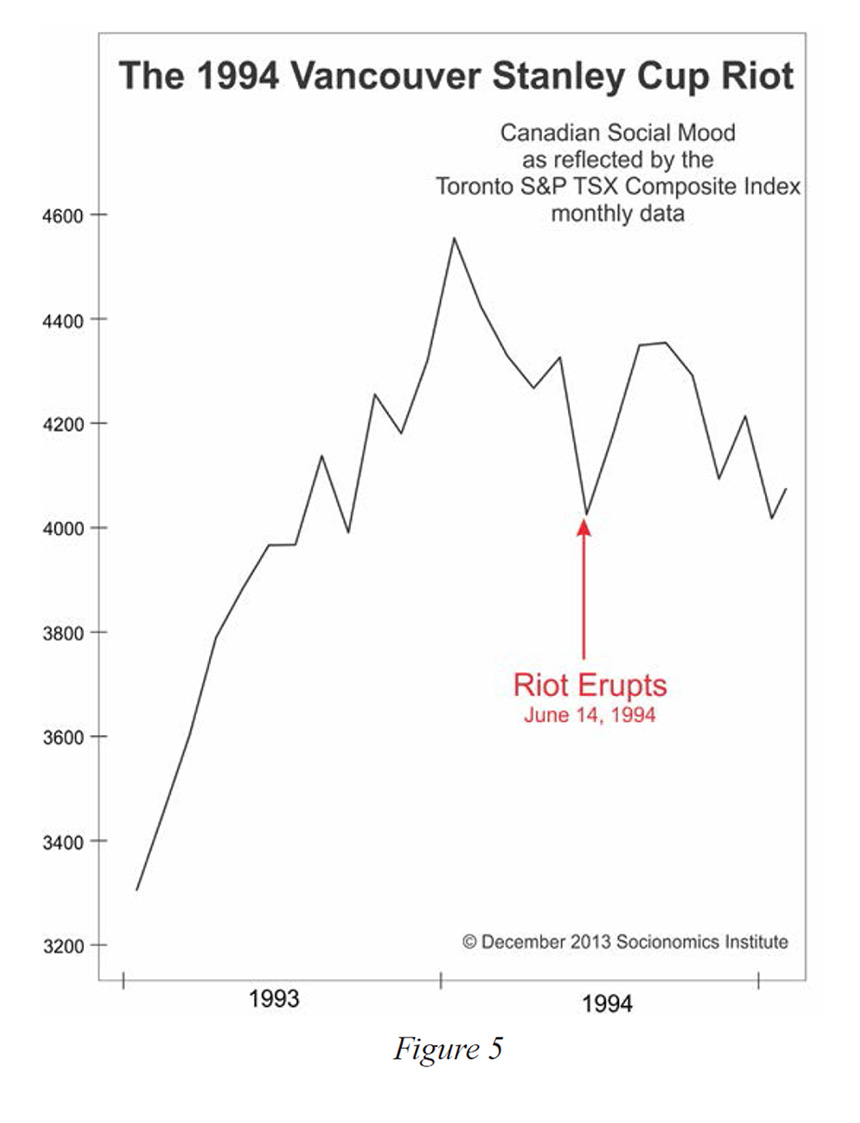
We think that social mood played a role in the riot, because it erupted after a 9% decline within a larger 22% bear market in the Toronto S&P/TSX Composite Index (see Figure 4).
In similar fashion 17 years earlier, the 1994 Vancouver Stanley Cup Riot also occurred after Game 7 of the Stanley Cup Finals. The June 14 riot followed a 12% drop in the S&P/TSX Composite Index (see Figure 5).
We think the stock market declines and the sour faces in the hockey crowd reflect the same thing: a negatively trending social mood.
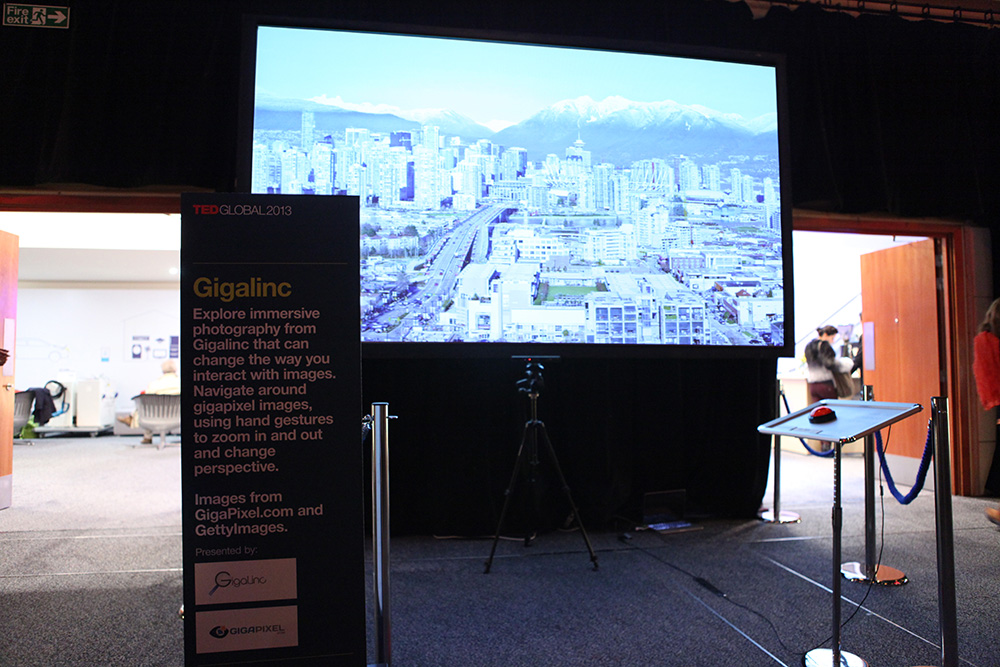
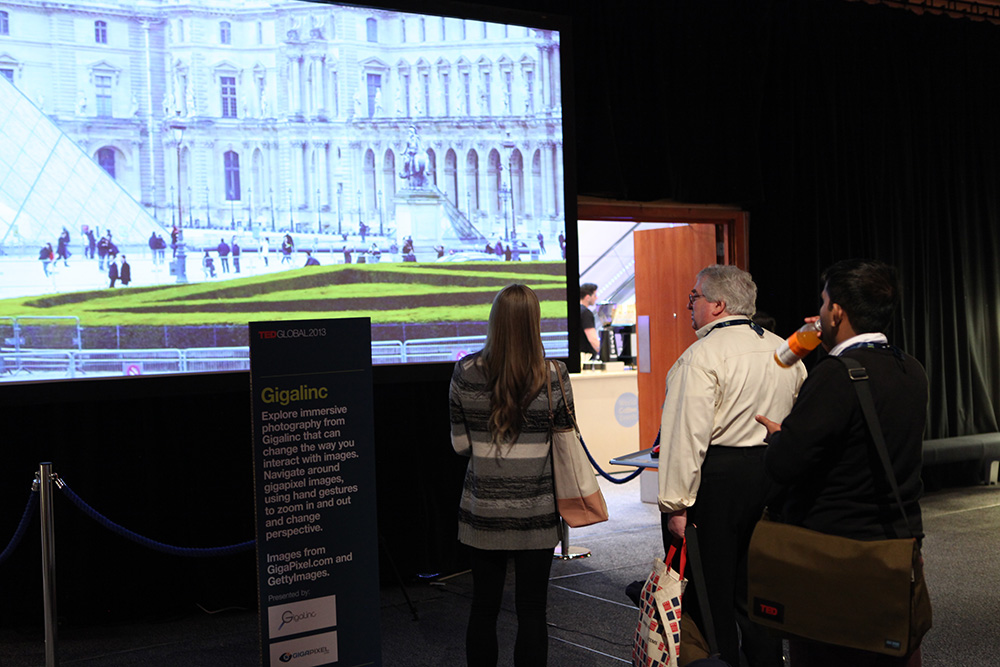
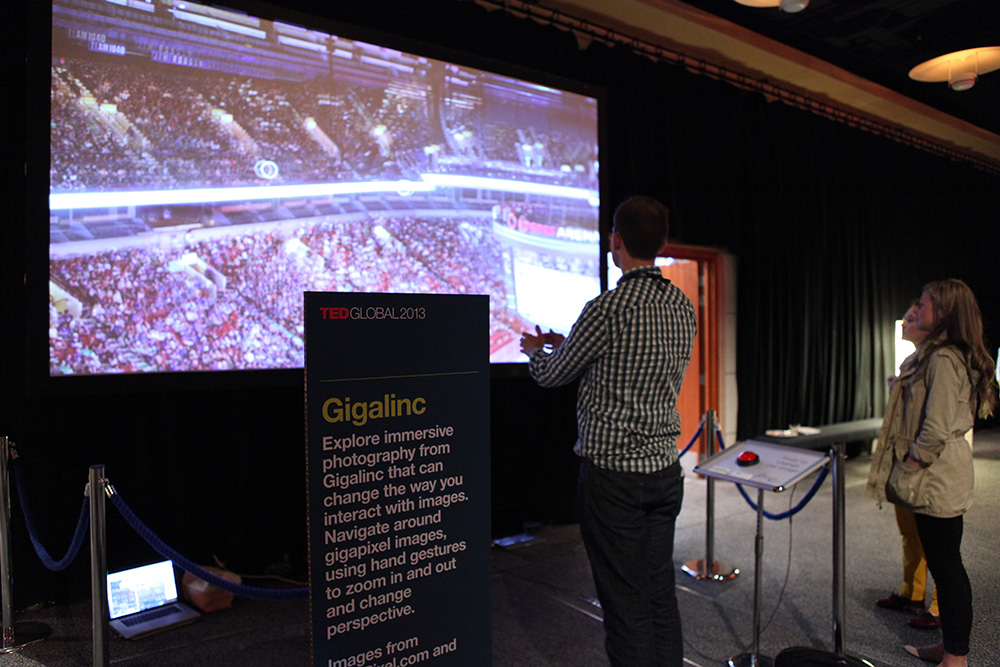
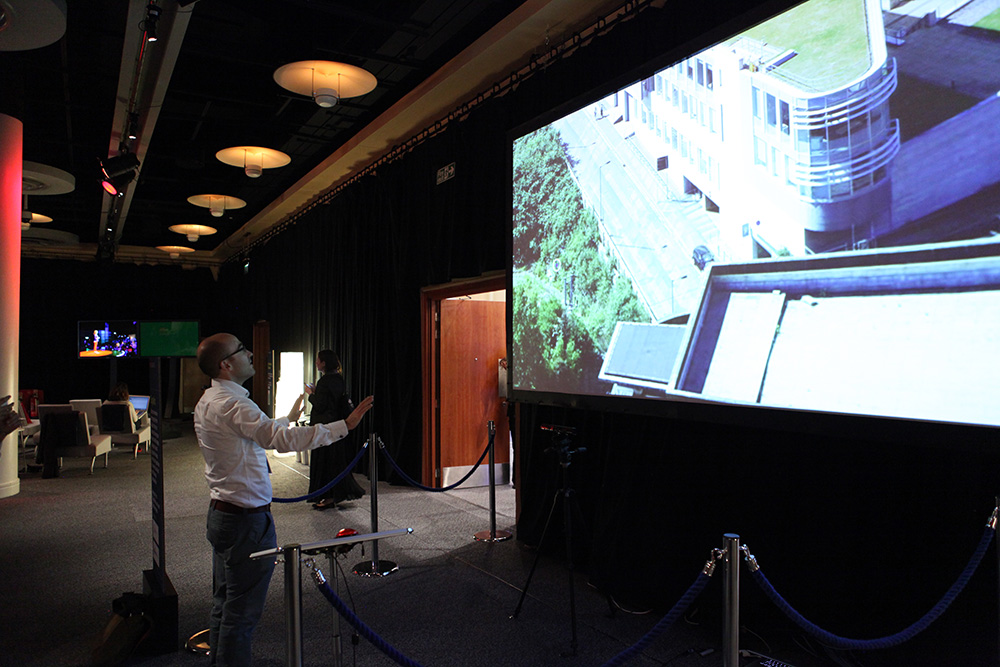
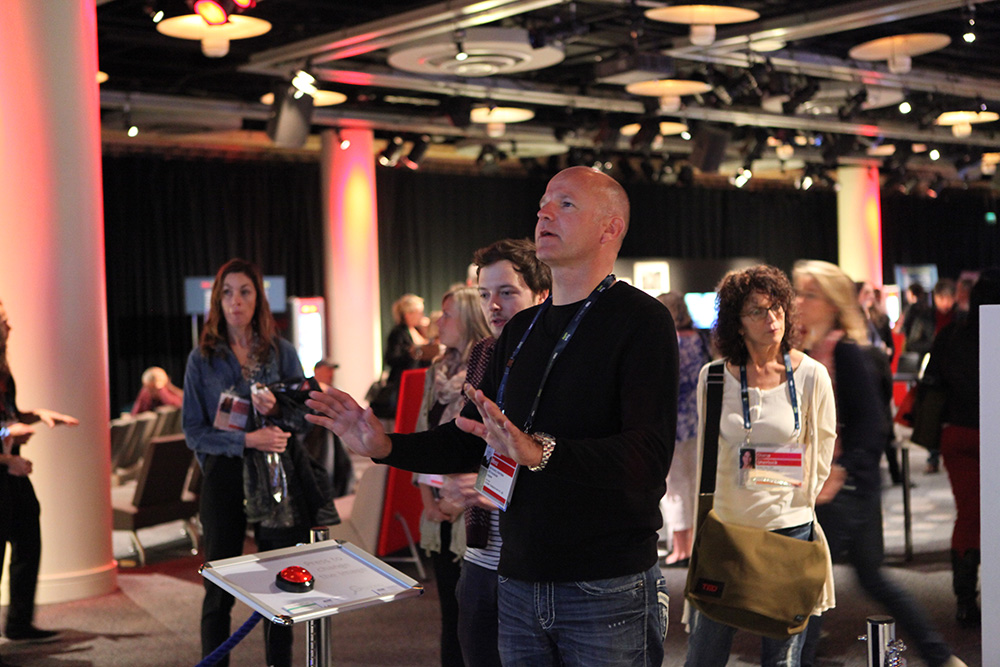
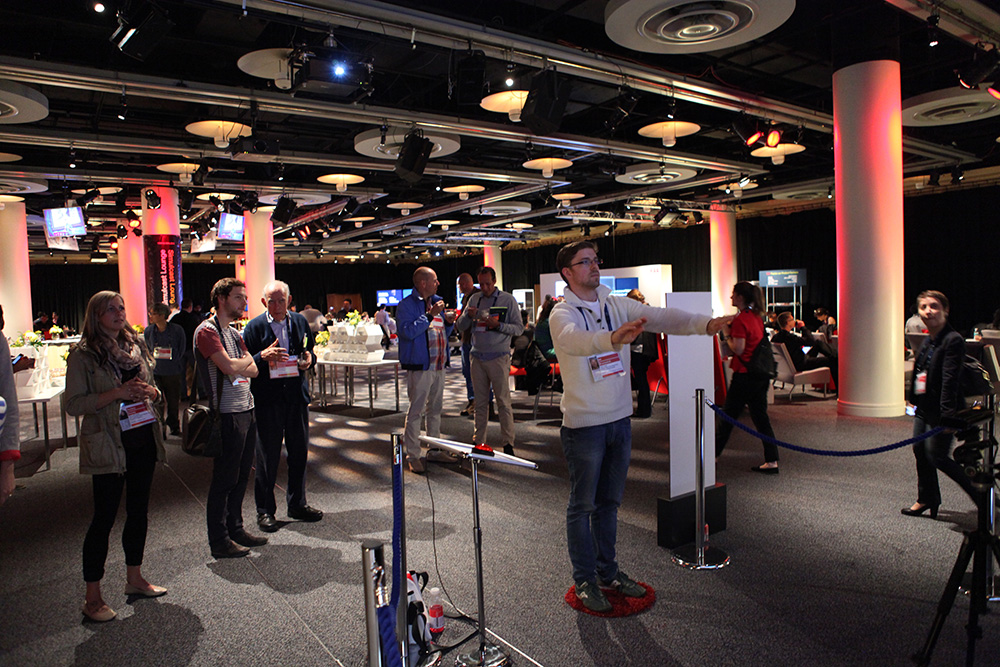
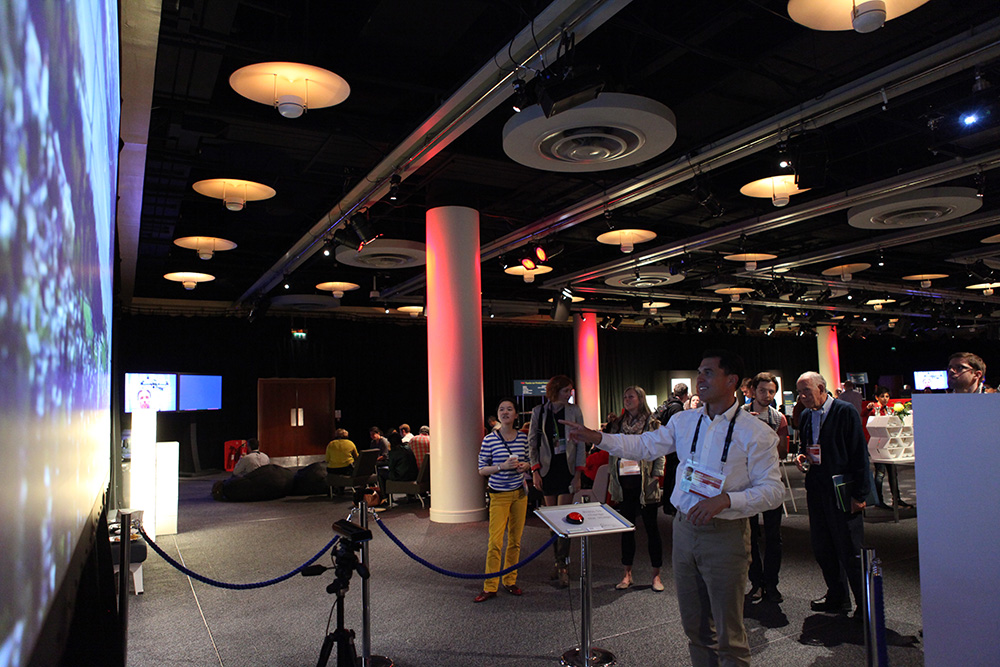
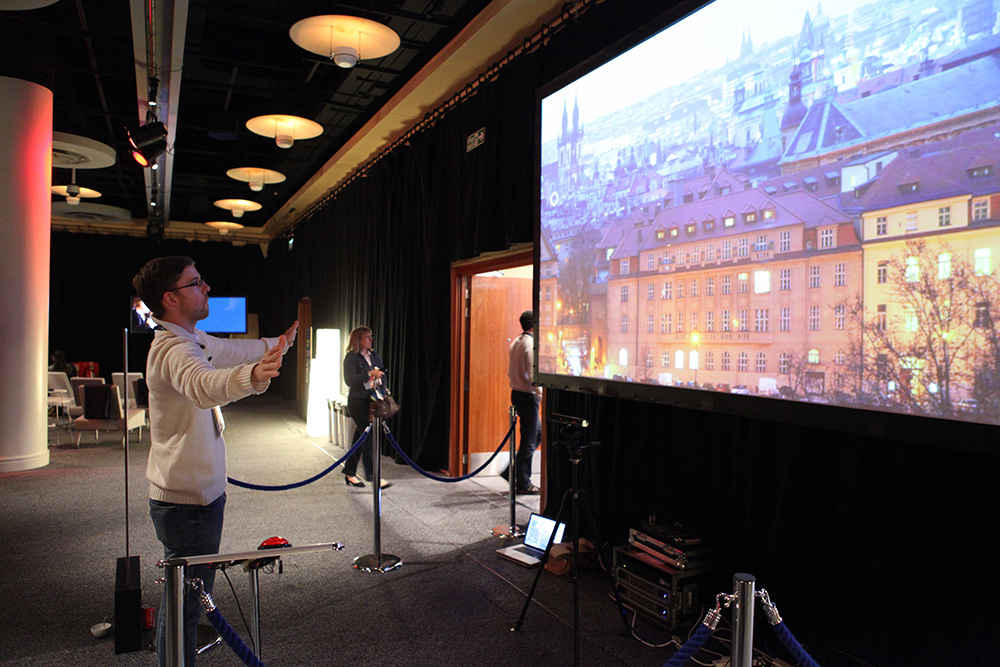
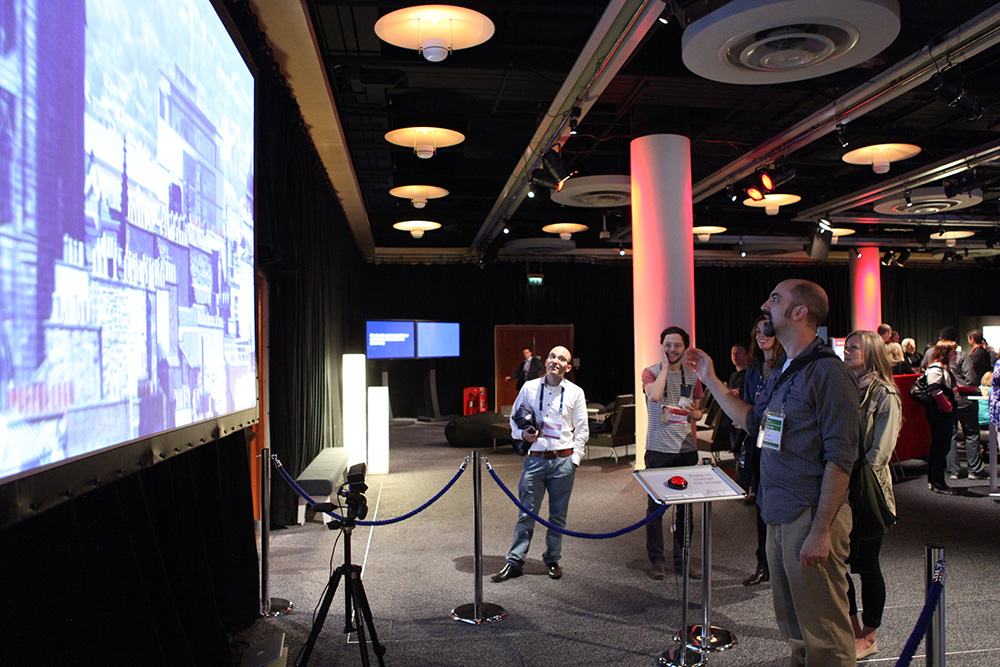
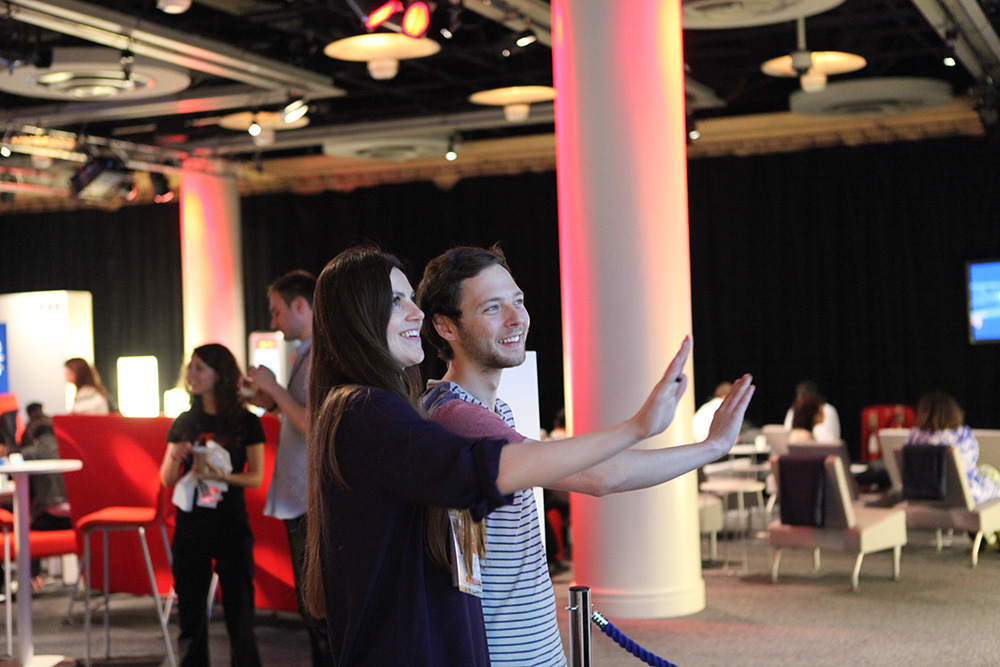
In 2011, I met Samuel Cox. I invited him to Vancouver to have an exhibit of my gigapixel images using GigaLinc, an interactive user interface he developed which allows viewers to navigate and explore a gigapixel image in detail using Kinect-based hand-gestures, zooming in and out of areas of particular interest. Surround-sound adds to the multi-sensory experience.
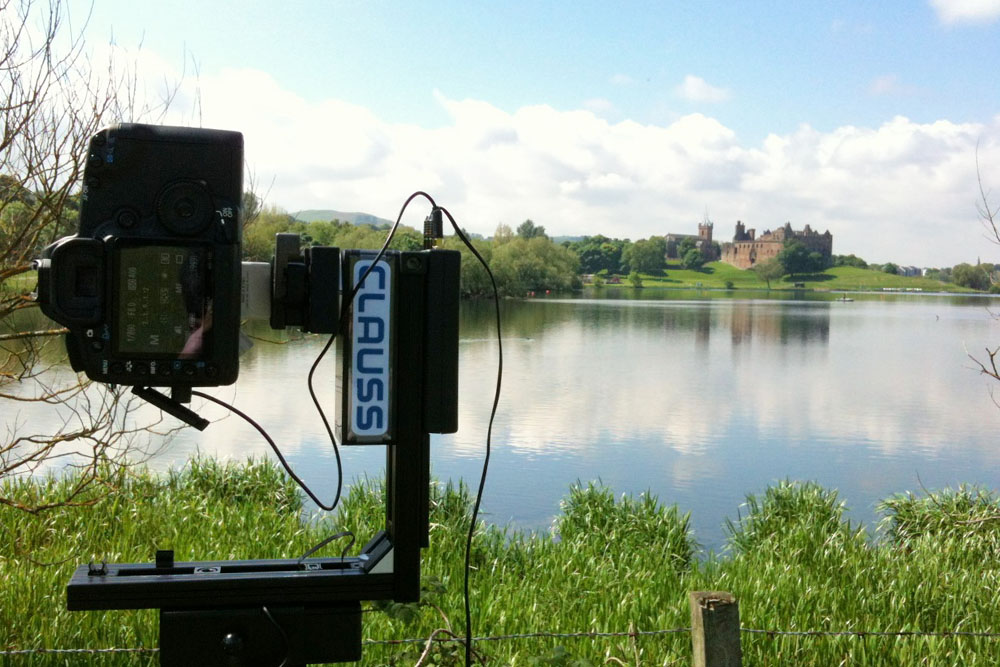
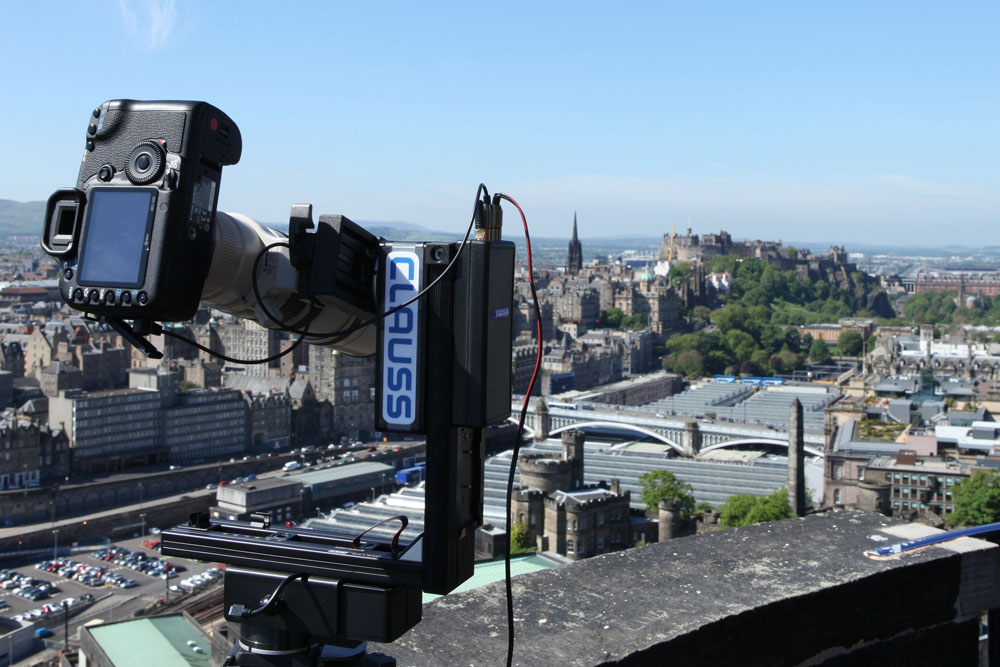
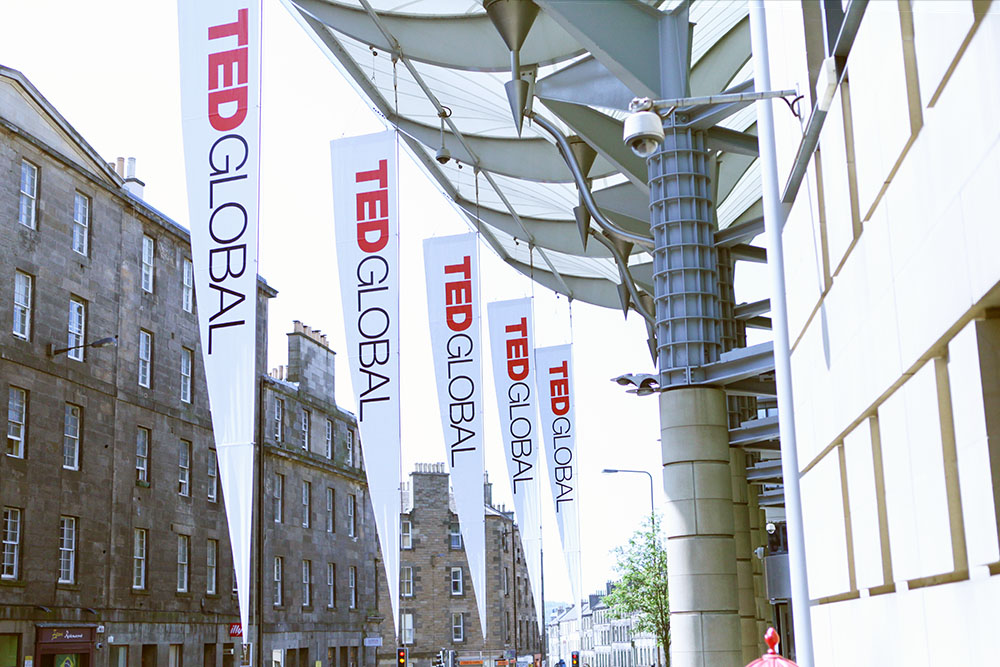
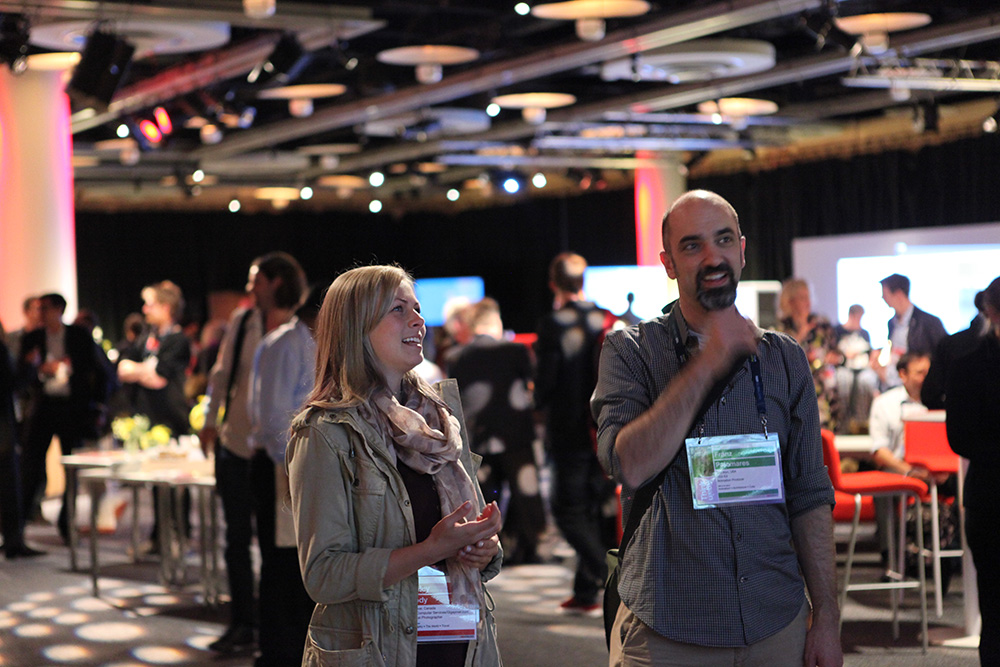
This time around, Sam invited me in early 2013 to collaborate again with him as part of an exhibit for TEDGlobal 2013 in Edinburgh, Scotland from June 10-14. My gigapixel images were used for the interactive display. TEDGlobal would be a great opportunity not only to showcase my images but also to promote my business as well. I took Ashley (Drody) along to help out and assist.
We had a total of about 16 gigapixel images on display during the exhibit. Attendees of TEDGlobal were not only fascinated by GigaLinc (the use of hand-gestures to explore images projected on a wide screen) but were also so amazed (some in disbelief) at the high quality of the resolution and the level of detail of my gigapixel images. My image of the Vancouver 2011 Stanley Cup Crowd before the riot was the most popular photo and had the greatest impact.
The exhibit was a success and had nothing but positive feedback from both TEDGlobal organizers and attendees. It was a great experience!
While in Prague, I got in touch with a very close friend, Carmela Borgers, whose husband, Alain Borgers, was the General Manager of Shangri-la Hotel Paris. Since it was their last year in Paris before her husband gets re-assigned to another Shangri-la Hotel property, I asked if I could visit her and also shoot the view from one of the hotel’s suites. She gladly welcomed me over and confirmed that the suites were available, that is, they weren’t booked and I could shoot from one of them. From Prague, Ashley (Drody) and I made an unplanned detour to Paris.
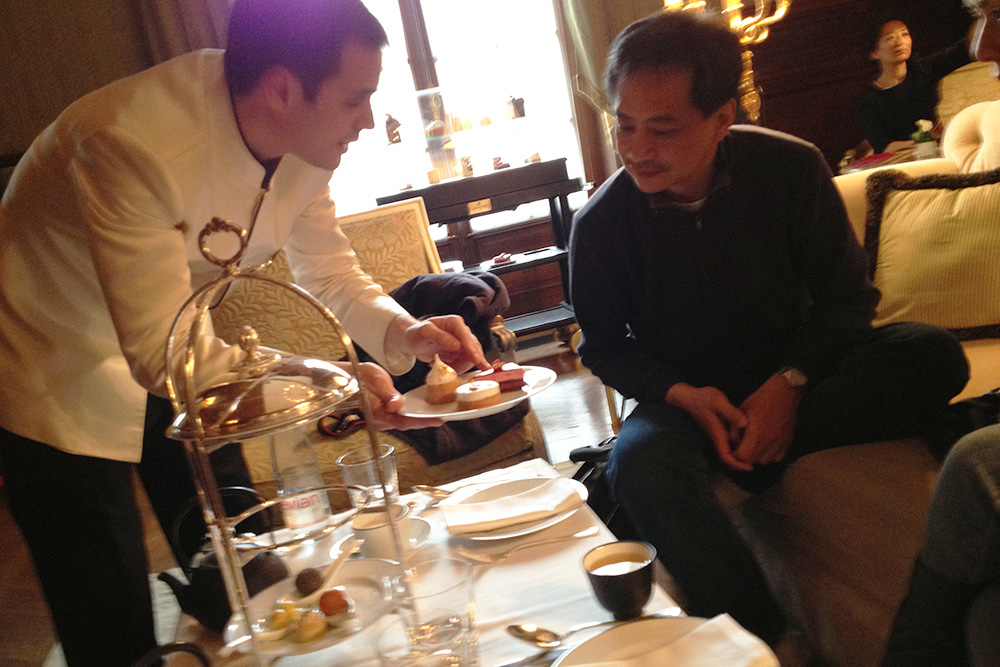
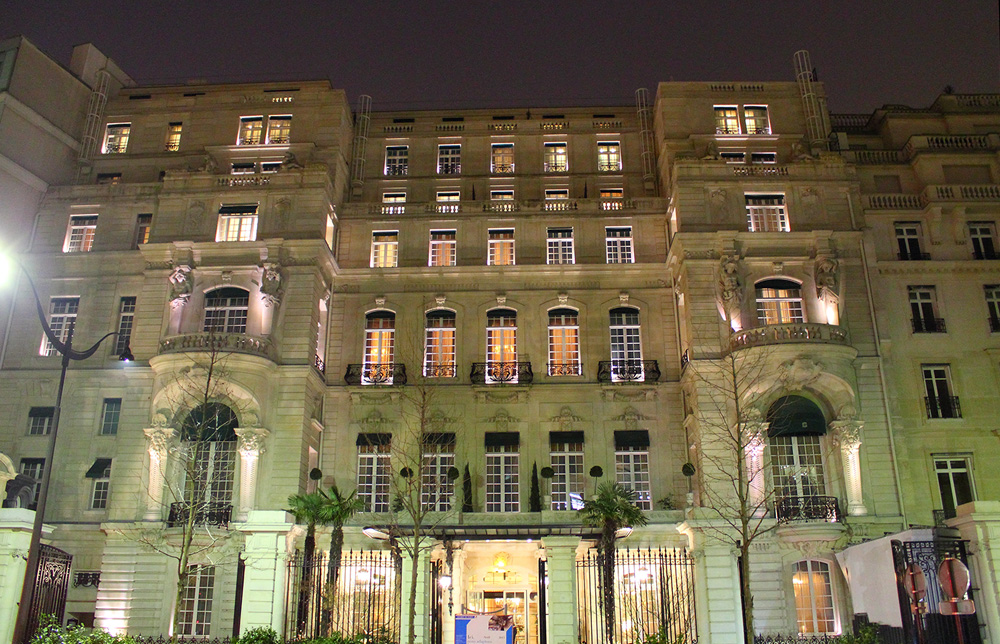
The building of Shangri-la Hotel used to be the residence of Napoleon Bonaparte’s grandnephew, Prince Roland Bonaparte. Many parts of the hotel were fully restored to its old stylish elegance. I was suppose to head up to the suites at 4pm but I met Carmela first in the hotel’s lobby lounge a couple of hours earlier for some tea, to chat and catch up with each other. During this time, Carmela checked with the hotel staff and made sure that everything for the shoot was a go. The Assistant Front Office Manager, Hubert Savouré, came back with some bad news: at the last minute, all the suites got booked. What a bummer! I’ll miss my one and only chance to shoot from a unique view.
Afternoon tea before the shoot
Fortunately, the Resident Manager, Matthias Terrettaz, provided me with an alternative – the roof of the hotel. Are you kidding? The suites being unavailable at the last minute actually turned out to be a blessing! I ended up shooting from a much better vantage point than what I originally came for! Furthermore, Shangri-la Hotel Paris doesn’t give access to their roof to anyone not even the public. WOW!!! I got even more excited for the shoot!
Accompanied by Messrs. Terrettaz and Savouré, we headed up to the roof. Carmela was able to go up as well and see the view for the very first time.
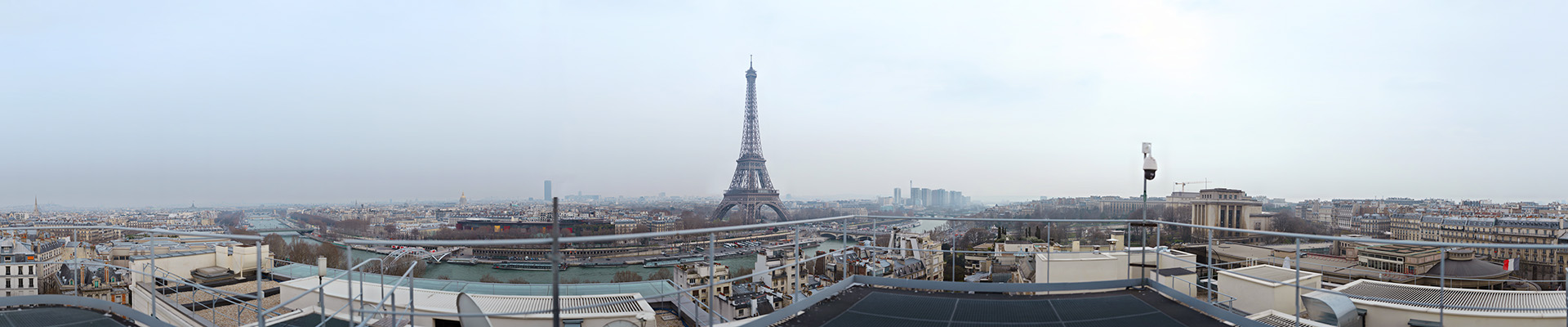
I was blown away by the spectacular, breath-taking view: not only do you get a full unobstructed 360° view of Paris and the River Seine, but you can also see the entire base and 3-legs of the Eiffel Tower (a very rare view). Next to the Shangri-la Hotel was the residence of Gustave Eiffel. According to history, Gustave stipulated, as part of his contract to construct the tower, that he has an unobstructed view of the Tower from his residence. To this day, the city of Paris continues to honor the contract. And because Shangri-la Hotel sits right next to Eiffel’s residence, it also enjoys an unobstructed view of the Tower.
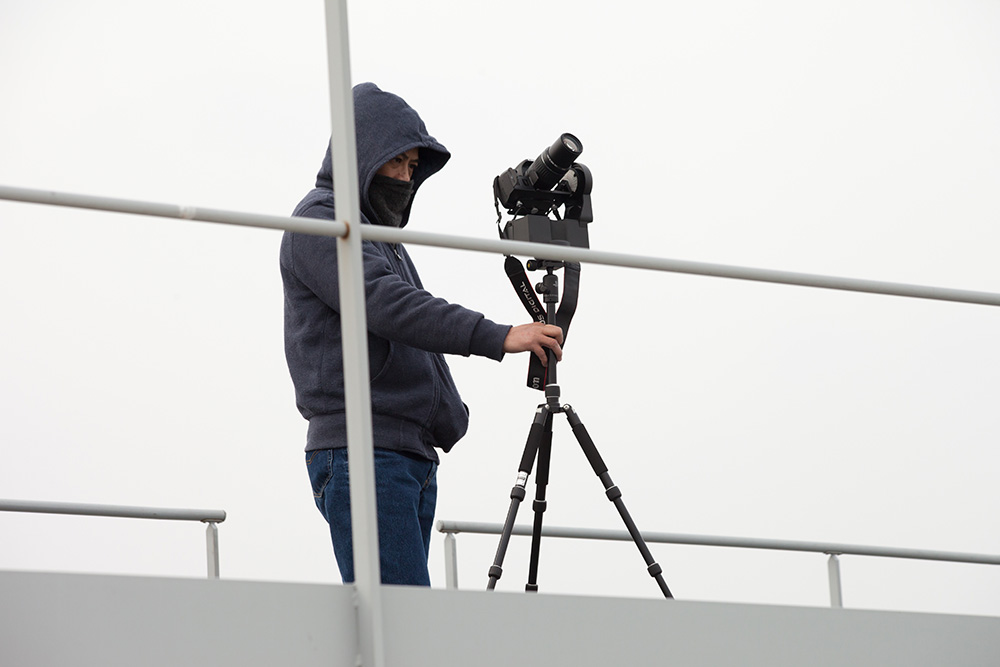
After admiring the view for a few minutes, I set up my camera and my GigaPan EPIC 100 and captured a full 360° view of Paris. It was a very cold and cloudy day but was still a spectacular view. I’m glad I made the trip to Paris for this once-in-a-lifetime opportunity.
The final image turned out to be an 11,191 megapixel image (278,117 x 42,838 pixels) composed of 1,638 individual photos stitched together.
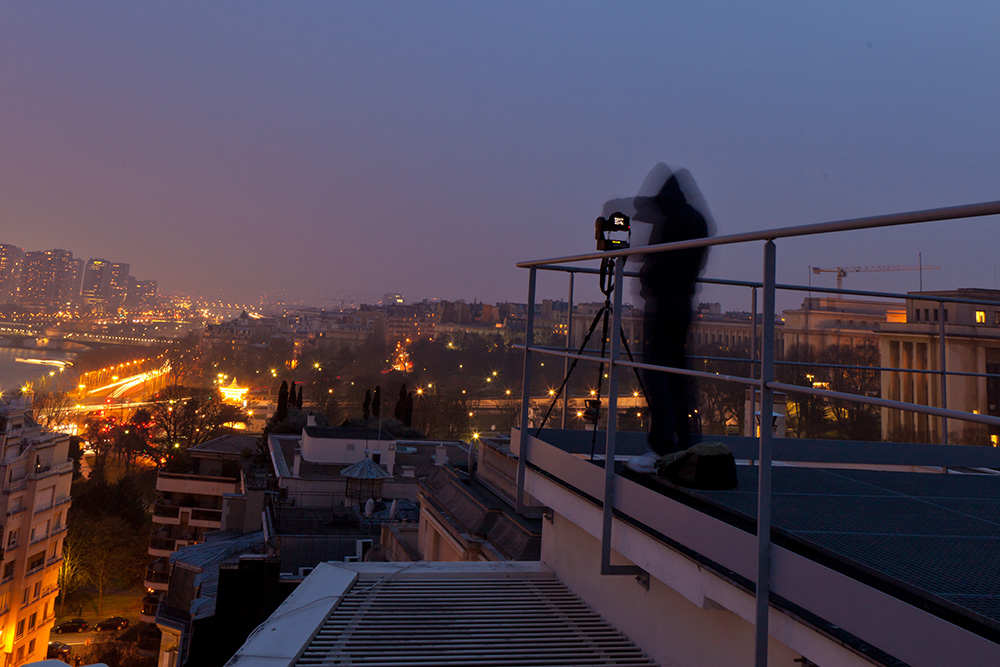
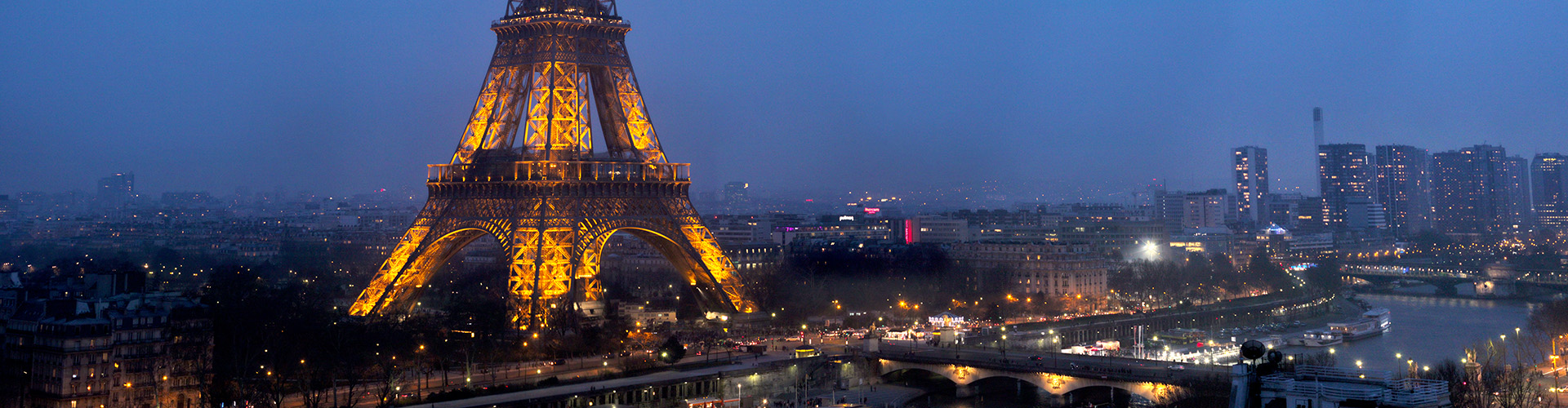
I was able to capture a smaller gigapixel image at night.
A very special thank you to Shangri-la Hotel Paris for the roof access, in particular to Alain Borgers, Carmela Borgers, Matthias Terrettaz, Hubert Savouré.